I’ve seen too many riders lose their bikes because they trusted a single lock.
You’re probably here because you know one chain isn’t enough anymore. Thieves are getting smarter and you need to stay ahead of them.
Here’s the reality: motorcycle theft happens fast. A good thief can beat most locks in under two minutes. That’s why you need layers, not just one expensive lock.
I spent years testing different security setups and watching what actually stops theft. Not what manufacturers claim works. What works on the street.
This guide shows you how to secure your motorbike fmbmototune with a system that makes thieves move on to easier targets. I’ll walk you through each layer and why it matters.
You’ll learn which combinations actually deter theft, where most riders leave gaps in their security, and how to protect your bike without spending a fortune on gear you don’t need.
No scare tactics. Just practical steps that work in the real world.
The Core Philosophy: Building Layers of Defense
You know what most riders do wrong?
They buy one good lock and call it a day.
I used to think the same way. Spent $120 on a heavy-duty chain lock and figured my bike was safe. Then I talked to a guy who’d had three bikes stolen in two years. All of them had locks.
Here’s what he told me. Thieves don’t give up because of one lock. They give up when the job takes too long or makes too much noise.
That’s when I learned about layered security.
Beyond a Single Lock
A single security measure is a single point of failure. Period.
According to the National Insurance Crime Bureau, motorcycle thefts jumped 9% between 2019 and 2020 (and that trend hasn’t reversed). The bikes that got stolen? Most had some security. Just not enough.
Think about it this way. A thief with bolt cutters can get through most locks in under 60 seconds. That’s not enough time for anyone to notice or react.
But what if that same thief has to deal with a lock and an alarm and a visible GPS tracker? Now we’re talking five minutes. Maybe ten. That’s when they start looking over their shoulder.
The Three Essential Layers
When I talk about how to secure your motorbike fmbmototune style, I mean building three distinct layers:
Physical deterrents. Locks and anchors that slow thieves down.
Electronic alerts. Alarms and tracking devices that make noise or send you notifications.
Situational awareness. Where you park, how you position your bike, what you do before walking away.
Each layer covers what the others can’t.
The Thief’s Calculation
I’ve read interviews with convicted bike thieves (yeah, those exist). They all say the same thing. They’re doing math in their heads before they even touch your bike.
How long will this take?
How much noise will I make?
What are the chances someone notices?
Your job isn’t to make your bike impossible to steal. It’s to make stealing it take too long, make too much noise, and carry too much risk. You want them to look at your setup and think, “Not worth it.”
There’s always an easier target down the street.
A Modern Security Strategy
At FMB MotoTune, we don’t just talk about gear. We talk about how gear works with your habits.
A $200 alarm doesn’t help if you park in a blind alley where no one can hear it. A thick chain doesn’t matter if you lock your bike to a signpost that unbolts from the ground.
Security works when you combine the right tools with smart decisions. That’s what the rest of this guide covers.
Layer 1: Hardened Physical Deterrents
I still remember the morning I walked out to find my first bike gone.
Just an empty spot where I’d parked it the night before. I’d used a cheap lock from the hardware store because I thought it would be enough.
It wasn’t.
That’s when I learned something most riders figure out the hard way. Your bike’s first line of defense isn’t fancy tech or GPS trackers. It’s good old-fashioned metal that makes thieves move on to easier targets.
The Foundation: Disc Locks
Let me start with disc locks because they’re your baseline protection.
You’ve got two types here. Alarmed and non-alarmed. I use both depending on where I’m parking (alarmed for overnight, non-alarmed for quick stops).
The job of a disc lock is simple. It stops your bike from rolling away. Thieves can’t just push it into a van if the wheel won’t turn.
But here’s what nobody tells you about disc locks. You will forget it’s there. You’ll start your bike, twist the throttle, and lurch forward into a near-crash. I’ve done it twice.
Get a reminder cable. Thread it through your brake lever or throttle. It’s a bright visual cue that saves you from looking like an idiot in front of other riders.
The Unmovable Object: Chains and Anchors
Now we get to the serious stuff.
A heavy-duty chain paired with a quality lock is what actually stops determined thieves. I’m talking 16mm hardened steel chain at minimum. Anything thinner and you’re just slowing them down by a few minutes.
The trick is how you use it. Lock your chain through the frame, not just the wheel. Wheels come off. Frames don’t. Then attach it to a ground anchor or something that truly can’t move (not a street sign that unbolts).
Keep the chain off the ground. When it’s lying on pavement, thieves can use bolt cutters with the ground as leverage. Suspended in the air? Much harder to cut.
I know a guy who wrapped his chain around a wheel because it was convenient. Came back to find the wheel removed and his bike gone. Don’t be that guy.
Secondary Locks: Grips and Levers
Grip locks and lever locks are your quick-deploy option.
I use mine when I’m stopping for gas or running into a store for five minutes. They clamp onto your brake lever or throttle grip and make the bike unrideable. Not impossible to remove, but visible enough that most thieves won’t bother.
Think of them as the “keep honest people honest” layer. They work because they’re fast to put on and bright enough that anyone walking by can see your bike is secured.
For longer stops or overnight parking, you’ll want something heavier. But for quick errands? These are perfect.
Choosing the Right Gear
Quality matters more than brand names when it comes to how to secure your motorbike fmbmototune.
Look for hardened steel construction. If the manufacturer doesn’t specify the steel grade, that’s a red flag. You want locks with anti-pick cylinders because cheap locks can be picked in under a minute (I’ve seen it done).
Chain thickness matters too. Anything under 16mm is too easy to cut through. I run a 19mm chain myself because the extra weight is worth the peace of mind.
Pro tip: Buy your locks from motorbike tuning fmbmototune specialists who understand what actually works on the street, not just what looks good in photos.
The best lock is the one that makes a thief choose someone else’s bike instead of yours.
Layer 2: Smart Electronic Defenses
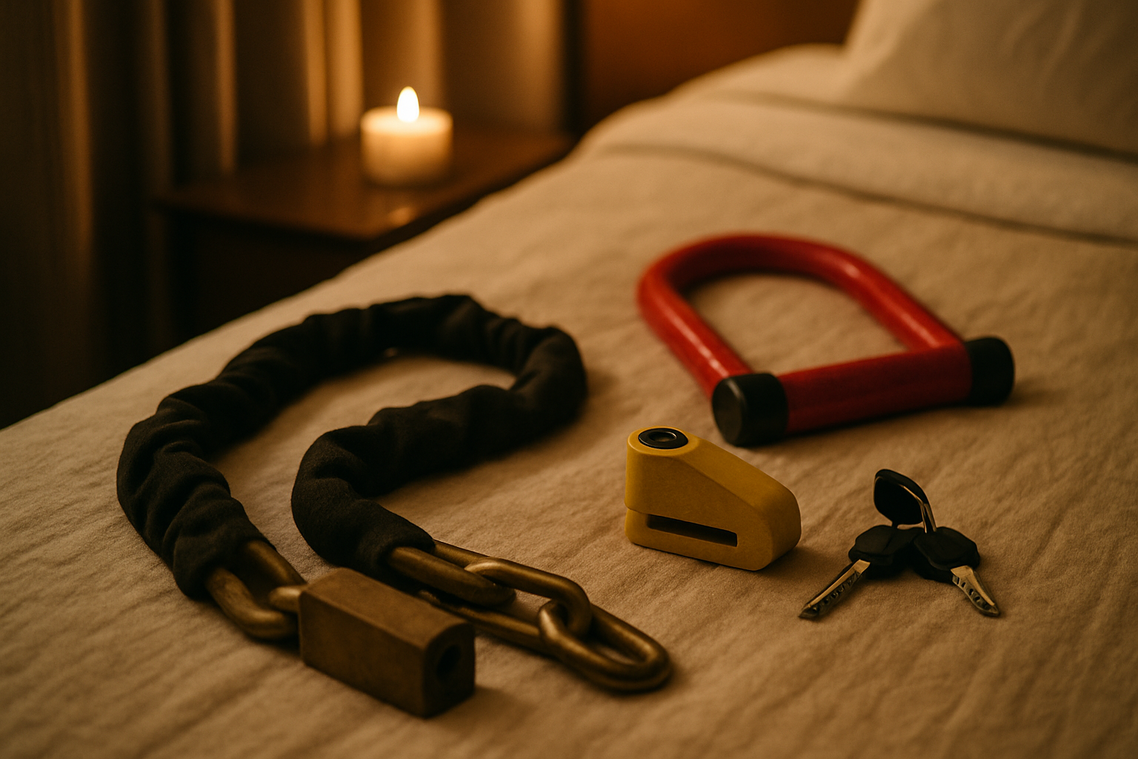
Physical locks buy you time.
But electronics? They fight back.
I’m talking about the second layer of defense that most riders skip. They spend hundreds on chains and disc locks, then leave their bike completely silent and invisible to the digital world.
That’s a mistake.
Making Noise: Alarms and Immobilizers
A motion-sensitive alarm does one thing really well. It makes thieves panic.
The second someone bumps your bike or tries to move it, you get 110 decibels of attention. That’s loud enough to wake up a neighborhood (and trust me, thieves hate that).
You’ve got two options here. Factory alarms come built into some bikes and integrate with your key fob. They work fine but they’re basic.
Aftermarket systems give you more control. You can adjust sensitivity so a cat walking by doesn’t set it off, but a guy with bolt cutters absolutely will.
Then there’s the immobilizer. This stops the engine from starting without the correct key or fob. Most modern bikes have these built in. If yours doesn’t, get one installed.
Eyes on Your Ride: GPS Trackers
Here’s where things get serious.
A hidden, hardwired GPS tracker won’t stop a theft. But it’ll help you get your bike back.
I’m not talking about those cheap battery-powered units that die in two weeks. You need something wired into your electrical system that stays active 24/7.
Look for these features. Real-time tracking so you know exactly where your bike is right now. Geofencing that alerts you if someone moves it outside a set boundary. And low power draw so it doesn’t kill your battery.
Mount it somewhere creative. Under the seat, inside the airbox, behind body panels. Anywhere a thief won’t think to look in the first five minutes.
The Tech Advantage
Think of it this way.
Locks slow thieves down. Electronics tell you what’s happening while it’s happening.
That’s the difference between finding out your bike is gone in the morning and getting an alert on your phone at 2 AM when someone’s messing with it. One scenario gives you options. The other just gives you a police report.
When you’re figuring out how to secure your motorbike fmbmototune style, you stack these layers. Physical barriers first, then electronic backup.
Because the best security system is the one that makes thieves give up and move to an easier target.
Layer 3: Situational Awareness & Smart Habits
You’ve got good locks. Maybe even a GPS tracker.
But here’s what most riders miss. Thieves don’t just look for weak security. They look for patterns.
Think Like a Thief
When you park, ask yourself one question. Would I steal from here?
If the answer is yes, move your bike.
Look for spots with good lighting. Not just any light but the kind that actually works at 2 AM. High foot traffic helps too (nobody wants witnesses). And if you spot security cameras, park where they can see your bike.
I know it sounds obvious. But I’ve watched riders park in the darkest corner of a lot because it was convenient.
The Power of a Cover
A motorcycle cover does more than protect your paint.
It hides everything. The make, model, and any security devices you’ve installed. Thieves hate uncertainty. They want to know exactly what they’re dealing with before they commit.
Plus, removing a cover takes time. It makes noise. It draws attention.
Most thieves will just move on to an easier target.
Vary Your Routine
If you commute daily, don’t park in the exact same spot at the exact same time.
Switch it up. Even small changes matter.
Thieves who scout locations notice patterns. They know when you arrive and when you leave. They know where your bike sits for eight hours straight.
Break that pattern and you’re already harder to predict.
Social Media Discretion
I get it. You want to share your ride.
But posting your regular parking spot or tagging your work location? That’s handing thieves a roadmap.
Save the photos for when you’re actually riding. Not when your bike is sitting somewhere for hours.
Now, you might be wondering what happens if someone still manages to get past all these precautions. That’s where knowing how to secure your motorbike fmbmototune with recovery tools becomes your last line of defense. Because even legendary motorbike riders fmbmototune will tell you that no security is perfect.
The goal isn’t to make your bike impossible to steal.
It’s to make it annoying enough that thieves pick someone else’s.
Ride More, Worry Less
You came here worried about your bike getting stolen.
I get it. That anxiety kills the joy of ownership. You should be thinking about your next ride, not whether your motorcycle will still be there when you get back.
Now you have a complete three-tiered framework for how to secure your motorbike fmbmototune. Physical barriers, electronic monitoring, and smart habits working together.
This isn’t about one magic solution. It’s about layers.
Each layer makes your bike harder to steal. Thieves want easy targets. When they see a disc lock, an alarm, and a bike parked in a smart location, they move on to something easier.
That’s the point. You’re not trying to build a fortress. You’re making your motorcycle unattractive compared to the one parked next to it.
Here’s what you do next: Look at your current setup and pick one weakness. Maybe you need a quality disc lock. Maybe it’s time to install a GPS tracker. Or maybe you just need to change where you park.
Add one new layer this week.
Then build from there. Your bike deserves protection, and you deserve peace of mind.
 Founder & Chief Executive Officer