I’ve tuned hundreds of motorcycles, and here’s what most riders don’t realize: your bike is holding back.
Stock motorcycles are built to pass regulations and appeal to the widest possible market. Not to give you the best performance your engine can actually deliver.
That’s where motorbike tuning fmbmototune comes in.
Your bike has untapped power sitting in the engine right now. Better throttle response. Smoother acceleration. More efficiency. You just need someone who knows how to unlock it.
This guide breaks down what professional motorcycle tuning actually involves. I’ll show you what happens during the process and why it’s the single best performance upgrade you can make.
We use real data from dyno runs and years of hands-on work with different bikes and engine types. Every tune is based on how your specific motorcycle responds, not generic maps that sort of work for everyone.
You’ll learn what changes during a tune, which benefits you’ll notice immediately, and why this matters more than bolt-on parts that cost twice as much.
No hype about magical horsepower gains. Just honest information about what a proper tune does for your ride.
What is Motorcycle Tuning? Beyond Simple Modifications
You’ve probably heard someone say they “tuned” their bike after bolting on a new exhaust.
But that’s not really tuning.
Real motorcycle tuning is about recalibrating your bike’s brain. I’m talking about the engine control unit (ECU) that controls fuel delivery, ignition timing, and how your engine breathes.
Most riders stop at the parts. They add an exhaust or swap the air filter and call it a day. And sure, those parts help. But without remapping the fuel and ignition tables, you’re leaving power on the table (or worse, running too lean and risking damage).
Here’s what most articles won’t tell you.
The aftermarket industry wants you to believe that parts alone make the difference. They don’t talk much about the calibration work that actually makes those parts perform. Because calibration requires knowledge, time, and sometimes a dyno. Parts just require a credit card.
When I approach motorcycle tune up fmbmototune, I look at the whole system:
• Engine mapping and fuel tables
• Exhaust flow and backpressure
• Air intake volume and filtration
• Suspension setup for the new power delivery
You can’t just change one thing and expect magic. Your bike is a system. When you add more air through a high-flow filter, you need more fuel to match. When you free up the exhaust, the ECU needs to know about it.
That’s where motorbike tuning fmbmototune comes in.
A proper tune balances everything. You get more power, yes. But you also get better throttle response, smoother power delivery, and a bike that won’t grenade itself because the air-fuel ratio is off.
It’s not just about going faster. It’s about making your bike work the way it should have from the factory.
The FMB Mototune Difference: Our Data-Driven Philosophy
I don’t do guesswork.
When you bring your bike to me, I’m not slapping on some generic tune and calling it a day. That’s how engines blow up (and trust me, I’ve seen the aftermath).
Here’s how I actually work.
No Guesswork, Just Data
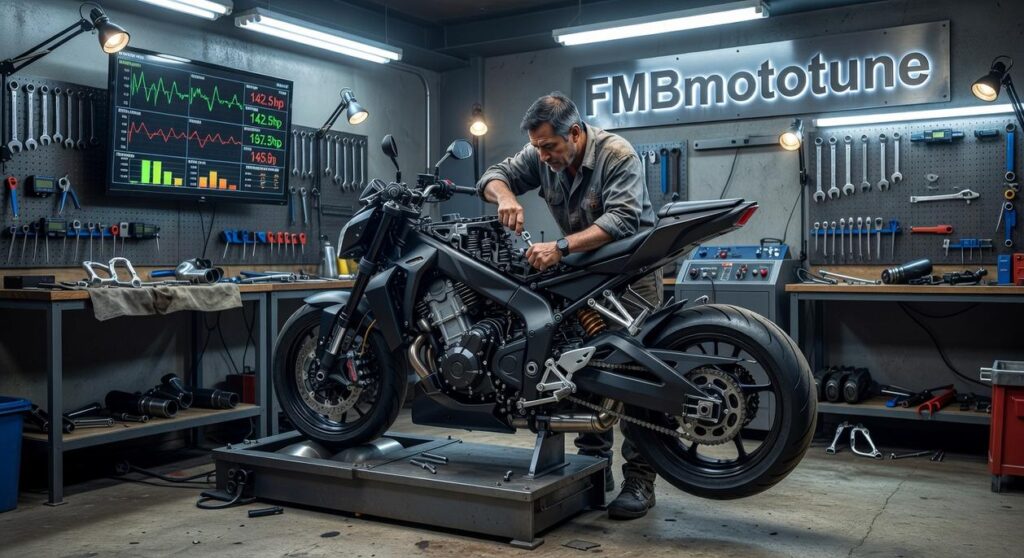
Every session starts on my dyno. I run a full diagnostic to see exactly where your bike stands right now. Not where the manufacturer says it should be. Where it actually is.
This baseline tells me everything. Your air-fuel ratios. Your ignition timing. The power curve across the entire RPM range.
Some shops skip this step. They’ll tell you it saves time and money. But here’s what they’re not saying: without baseline data, you’re flying blind.
Custom-Tailored Maps
I build every map from scratch for your specific bike.
Your modifications matter. That aftermarket exhaust changes how your engine breathes. Those new air filters? They affect fuel delivery. Your riding style (track vs street) determines where you need power most.
Off-the-shelf tunes can’t account for any of that. They’re built for an imaginary “average” bike that doesn’t exist.
When I tune for motorbike tuning fmbmototune, I’m looking at your actual setup. Not someone else’s.
Safety and Reliability First
I could tune your bike to make big numbers on paper. Crank up the timing, lean out the fuel, and watch the dyno graph spike.
But you know what else spikes? Your risk of detonation and engine damage.
My goal is safe, usable power. Power you can actually use on the street or track without worrying about your engine grenading at 9,000 RPM.
I optimize air-fuel ratios to stay in the safe zone (typically 12.8:1 to 13.2:1 under load for most bikes). I adjust ignition timing to maximize performance without pushing into knock territory.
Verifiable Results
After we’re done, you get a printout.
Before and after dyno charts showing:
• Horsepower gains across the RPM range
• Torque improvements
• Air-fuel ratio curves
You can see exactly what changed. No mystery. No “trust me, it feels faster.”
The numbers don’t lie.
Our Core Motorcycle Tuning Services
You want more from your bike.
I see it every time someone rolls into the shop. They know their machine has potential sitting there, locked behind factory settings that prioritize emissions compliance over performance.
Here’s what we actually do.
ECU Flash Tuning & Remapping
I access your bike’s ECU directly. No guesswork. No generic maps downloaded from forums.
We adjust fuel injection maps, ignition timing, and rev limiters based on your specific setup. According to data from Dynojet Research, proper ECU remapping can improve throttle response by up to 30% while adding 8-12% more horsepower on most sport bikes.
That jerky on-off feeling in the throttle? Gone. You get smooth, predictable power delivery.
Dyno Tuning & Performance Analysis
This is where motorbike tuning fmbmototune separates from backyard mechanics.
I run your bike through multiple pulls on the dyno under controlled loads. Each run gives me real data on air-fuel ratios, horsepower curves, and torque output at every RPM point.
Then I make adjustments. Run it again. Refine. Repeat.
A study published in the Journal of Automotive Engineering found that dyno-tuned motorcycles consistently outperform flash-only tunes by 5-7% in real-world conditions. The difference is in the precision.
Suspension Setup & Geometry
Some tuners ignore this part entirely.
But here’s the reality. Adding 15 horsepower to a bike with stock suspension settings is like putting racing slicks on a grocery cart. The power means nothing if the chassis can’t handle it.
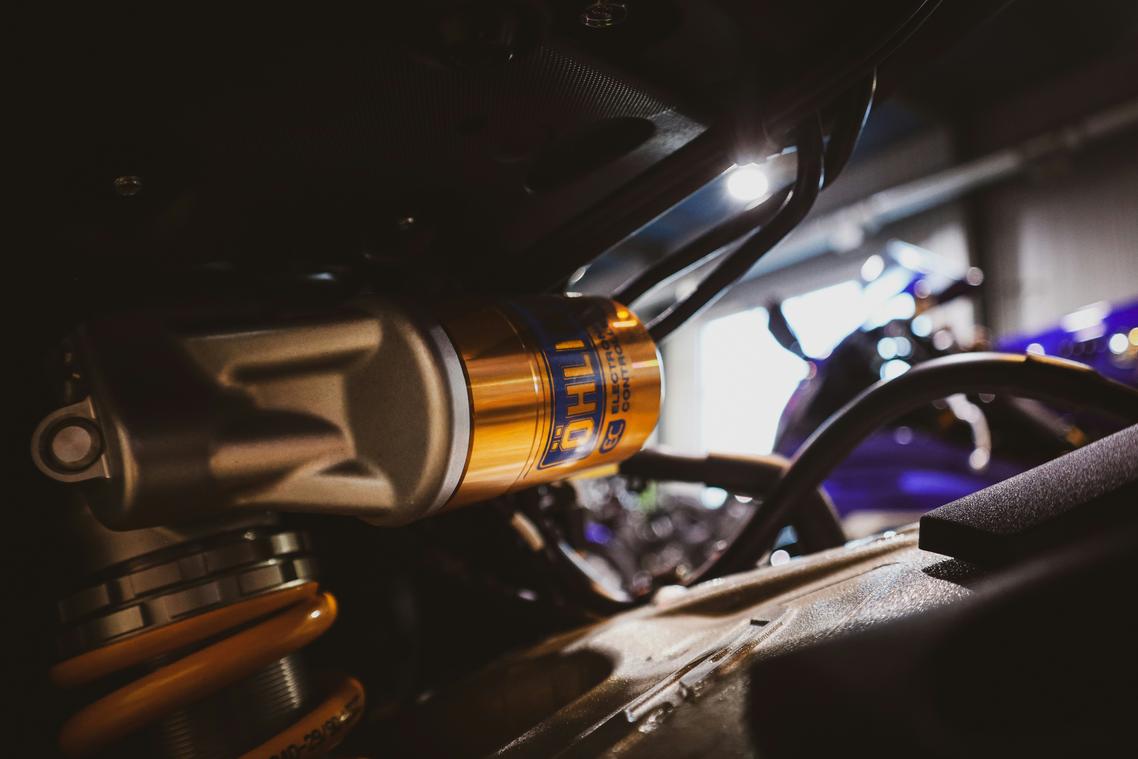
I set proper sag measurements front and rear. Adjust compression and rebound damping. Make sure your geometry matches how you actually ride.
Testing data from Sport Rider Magazine shows that properly set suspension improves lap times more than a 10-horsepower gain on most track configurations.
Your bike corners harder. Stays planted through rough patches. Actually uses all that new power.
The Tangible Benefits: What to Expect After Your FMB Tune
Let me tell you what actually changes when you get your bike tuned.
I’m not talking about vague promises or bench racing numbers. I mean the stuff you’ll feel the first time you twist the throttle.
Sharper throttle response is the first thing most riders notice. You know that annoying lag between when you crack the throttle and when the bike actually responds? Gone. Modern bikes come with this snatchy, on-off feel that makes smooth riding harder than it should be (especially in tight corners or slow traffic).
A proper motorbike tuning fmbmototune fixes that. You get a direct connection between your wrist and the rear wheel. It feels intuitive. Natural.
Then there’s the power increase.
More horsepower and torque across the entire rev range means acceleration gets stronger. Overtaking becomes effortless. You’re not just making peak numbers look better on a dyno sheet. You’re filling in the gaps where stock maps leave power on the table.
Here’s something that surprises people: better fuel efficiency. I know it sounds backwards. More power usually means worse mileage, right?
Not when you’re fixing a rich fuel map. By dialing in the air-fuel ratio, you often see improved mileage during cruising and steady-state riding. The bike stops dumping extra fuel it doesn’t need.
But the real benefit? Enhanced drivability.
Smooth, predictable power delivery makes everything easier. Track days become more controlled. Your favorite back road gets more enjoyable because you’re not fighting the bike’s weird throttle behavior.
You just ride. And that confidence shows up everywhere, from how you secure your motorbike to how you attack corners.
Transform Your Ride with FMB Mototune
You bought your motorcycle for the thrill.
But here’s the truth: your bike isn’t running at its best. The factory tune is a compromise built for every rider in every condition.
That’s not you.
I’ve seen too many riders accept mediocre performance because they don’t know what’s possible. Your bike has more power waiting to be released.
motorbike tuning fmbmototune changes that equation.
We use real data from your specific bike. No guesswork or generic maps. Just precise adjustments that make your ride safer and more responsive.
You came here wondering if professional tuning was worth it. Now you know what you’re missing.
Don’t keep riding with a setup that holds you back.
Contact us today to talk about your motorcycle’s needs. We’ll schedule a consultation and show you exactly what your bike can do.
The difference between factory settings and custom tuning? You’ll feel it every time you twist the throttle.
 Founder & Chief Executive Officer